






Wellbeing
PTTEP evacuates regional employees amid Middle East unrest; Thailand moves to secure energy supply






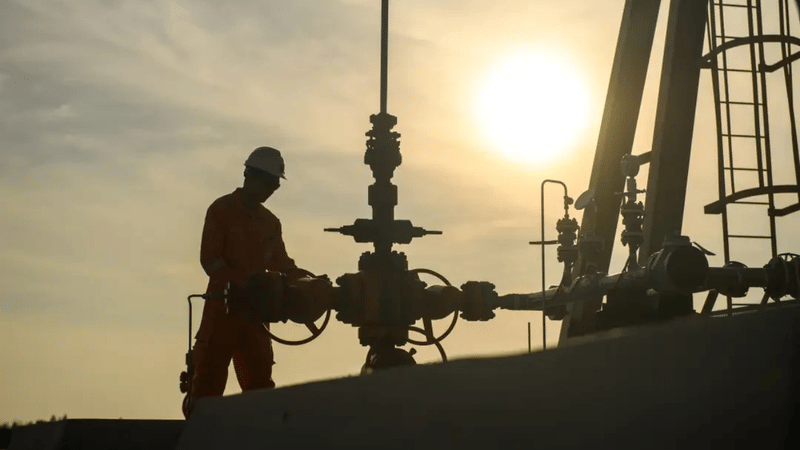
Thailand’s labour and foreign affairs authorities have agreed to suspend the deployment of Thai workers to high-risk areas in the Middle East.
Thailand’s national upstream company, PTT Exploration and Production Public Company (PTTEP), has evacuated workers from high-risk locations in the Middle East following the joint US-Israel strike on Iran, as authorities in Bangkok moved to safeguard the kingdom’s energy security.
The company said the evacuation was carried out in line with its security protocols and guidance from the Ministry of Foreign Affairs of Thailand.
PTTEP shared that it is closely monitoring the evolving situation and is placing the highest priority on employee safety. "we are closely monitoring the situation and placing the highest priority on the safety of our employees.
The company has evacuated personnel from high-risk areas in accordance with the company’s security protocols and advisory of Thailand’s Ministry of Foreign Affairs. The company has a Business Continuity Plan (BCP) in place to manage business operations during such uncertainties."
Despite the regional tensions, the Thai operator confirmed that its petroleum exploration and production activities in the United Arab Emirates and Oman continue to operate without disruption as of publication.
Preparations to protect domestic supply
PTTEP said it has initiated preparatory steps to support the Ministry of Energy of Thailand in maintaining continuity of domestic petroleum supply.
“These measures include maximising natural gas production in the Gulf of Thailand and adjusting the schedule of planned maintenance shutdowns to mitigate potential impacts on Thai people and the industrial sector,” the company said.
The energy ministry on Sunday sought to reassure markets, stating Thailand currently holds roughly two months of oil reserves and will seek alternative sources if the Iran conflict widens across the Middle East.
Deputy permanent secretary Veerapat Kiatfuengfoo said that as of 23 February, Thailand had in-country reserves of 4.92 billion litres of crude and refined oil, enough to meet demand for 38 days, according to local media reports.
A further 1.75 billion litres of Thailand-bound crude were already in transit from locations within and outside the Strait of Hormuz, while another 1.12 billion litres from alternative sources were also en route. Combined, these supplies could cover an additional 23 days of demand.
In the gas sector, four liquefied natural gas carriers are currently delivering cargoes to Thailand, with two vessels having already transited the Strait of Hormuz.
Labour deployment paused in high-risk Middle East zones
Thailand’s labour and foreign affairs authorities have agreed to suspend the deployment of Thai workers to high-risk areas in the Middle East.
Labour Minister Treenuch Thienthong noted that evacuation efforts are being carried out under the direction of the Prime Minister, with the Ministry of Labour ready to support operations. “Regional personnel have been instructed to monitor developments and prepare to relocate workers to safety zones if hostilities increase,” the Minister said.
The Ministry has reached a preliminary agreement with the Ministry of Foreign Affairs to halt new deployments to affected areas, with formal discussions ongoing to finalise the policy.
Currently, 77,495 Thai workers are under the supervision of Thai labour offices i.e. 58,921 in Tel Aviv, Israel; 11,227 in Abu Dhabi, United Arab Emirates; and 7,347 in Riyadh, Saudi Arabia.
Regional asset exposure
PTTEP maintains significant upstream interests across the Middle East. In Oman, the company holds stakes in Block 53, Block 61, Block 6 (PDO) and the Oman LNG project. In the UAE, its portfolio includes participation in Adnoc Gas Processing, the Abu Dhabi Offshore 2 and 3 exploration concessions, and the Ghasha development.
Reaffirming its readiness to protect Thailand’s energy security, PTTEP said it will continue to closely track developments and provide updates should the situation materially change.
Topics
Author
Loading...
Loading...